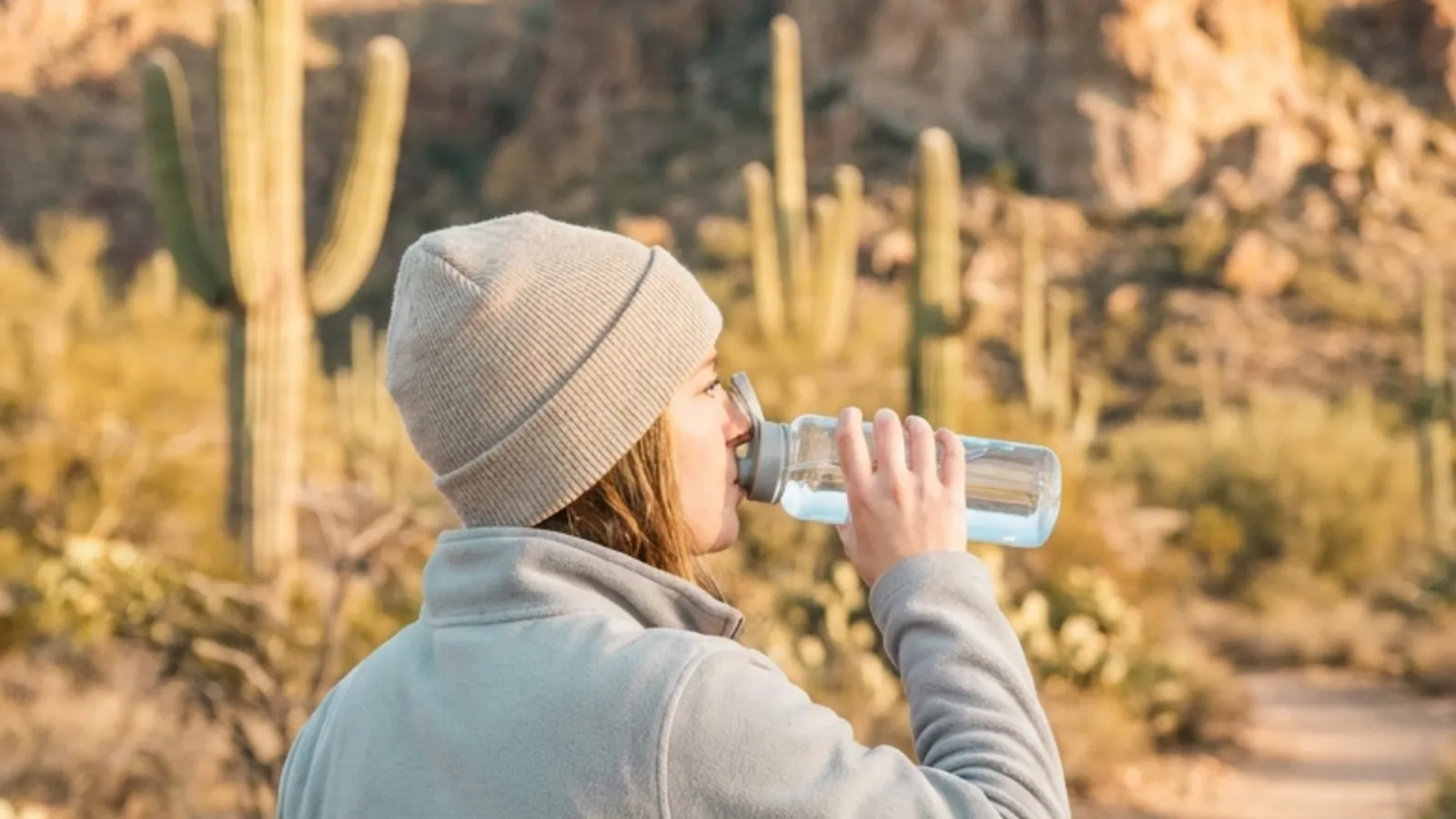
Can You Get Dehydrated in Winter? An Arizona Guide
Can you get dehydrated in winter? Yes, and it happens more quietly than it does in July. Cold air makes you pee more, dry air pulls water out with every breath, and your thirst signal gets weaker, so you fall behind without feeling it. In the East Valley, add dry desert air, long sunny hikes, and holiday drinking, and a slow fluid deficit is easy to build.
Most people in Queen Creek and Gilbert treat hydration as a summer problem. We see the winter version every year: the headache that shows up after a cool morning on the trail, the dry, tired feeling after a weekend of parties, the snowbird who never feels thirsty and drinks two glasses of water a day. This guide from our clinical team explains why it happens, what to watch for, and how much to drink.
This article is general education, not medical advice. If you think you are having an emergency, call 911.
Can you get dehydrated in winter? Why it happens
Winter dehydration is a fluid deficit that builds in cool weather because your body loses water through urine, breath, and sweat while your thirst drive slows down. You still lose fluid every hour. You just get fewer reminders to replace it.
Four things drive it:
- Cold-induced diuresis. When you get cold, blood vessels in your skin and limbs tighten to hold heat in your core. That pushes more blood volume toward the center of your body, and your kidneys respond by making more urine. An Institute of Medicine report on fluid balance in the cold says this central shift of fluid from peripheral vasoconstriction is "likely to be involved," even though the full mechanism is still debated.
- Weaker thirst. University of New Hampshire researchers led by Robert Kenefick found that cold exposure reduced thirst sensation by up to 40%, even in people who were already low on fluids. Their work, published in Medicine & Science in Sports & Exercise, found that the body's water-saving hormone (AVP) also responded more weakly than expected.
- Water lost through breathing. Cold, dry air holds very little moisture, so your lungs humidify every breath and you exhale that water. The same Institute of Medicine report estimates that respiratory losses rise with lower temperatures and climb sharply with activity, from about 10 mL per hour at rest to 60 to 90 mL per hour during moderate to heavy exertion.
- Hidden sweat. Layers trap heat. You can sweat steadily under a jacket on a brisk hike and never notice, because the dry air evaporates it fast.
That report also notes that soldiers in cold-weather operations are often dehydrated by 3 to 8% of body weight, levels similar to those reported in hot climates. East Valley winters are mild by comparison, but the same forces apply at a smaller scale.
Why Arizona winters make it worse
Our winters are dry. Long-term climate averages put Phoenix's December afternoon relative humidity around 33%, and indoor heating pulls moisture out of the air in your home and office even further. Dry air speeds up evaporation from your skin and airways, which is why your lips crack and your nose feels raw in January.
Then there is the weather we love. Highs in the 60s and low 70s pull everyone outside for pickleball and trail time. It feels too cool to need much water, so people drink less than they would in summer while staying just as active.
Winter hiking at San Tan Mountain Regional Park
San Tan Mountain Regional Park is one of the best winter hikes near Queen Creek, and it is a classic setup for winter dehydration. Maricopa County Parks describes the Goldmine Trail as about 3 miles round trip with a steep climb near the summit. On a cool, sunny morning, that is enough exertion to lose a real amount of fluid through sweat and heavy breathing.
Our advice for winter hikers:
- Bring the same water you would carry in spring, at least 1 liter for a short hike and more for longer loops.
- Drink before you start, not only once you feel thirsty.
- Pack a salty snack or an electrolyte mix if you will be out more than an hour.
- Check your urine color when you get home. Dark yellow means you are behind.
If you hike regularly, our fall hiking recovery guide covers post-hike refueling in more detail.
Holiday drinking and winter dehydration
Alcohol adds to the problem. According to Cleveland Clinic, alcohol reduces the release of vasopressin, the hormone that tells your kidneys to hold onto water, so more fluid ends up in your bladder. That effect can leave you with a net water loss even though you are drinking a liquid.
Stack a few holiday parties, a cold walk to the car, and a dry house, and the morning-after headache makes sense. Alternate each drink with a glass of water and eat a real meal with some salt. For more on party season, see our holiday party hangover recovery guide.
Signs of dehydration in winter
Winter dehydration usually shows up as fatigue, headache, and dry skin rather than intense thirst. Many people blame the weather or a busy schedule and keep going.
| Sign | Mild to moderate | When to get help fast |
|---|---|---|
| Thirst | Often absent or mild in cold weather | Extreme thirst with confusion |
| Urine | Dark yellow, less often than usual | Little or no urine for 8+ hours |
| Energy | Tired, sluggish, foggy | Unusual sleepiness, hard to wake |
| Head | Dull headache, lightheaded when standing | Fainting or severe dizziness |
| Skin and mouth | Dry lips, dry mouth, dry skin | Very dry mouth with no tears |
| Heart | Slightly faster pulse | Racing heartbeat or chest pain |
| Muscles | Cramps after exercise | Severe weakness or spasms |
Go to the ER or call 911 for confusion, fainting, chest pain, a racing heartbeat, or no urine for most of a day. Older adults, young kids, and people who take diuretics are at higher risk. Our guide to electrolyte imbalance symptoms explains when cramps or tingling point to a mineral problem instead of plain fluid loss, and signs you need IV fluids walks through ER, urgent care, and at-home options.
How much water do you need in winter?
Most healthy adults need about the same total water in winter as in other seasons. The National Academies set adequate intake at about 3.7 liters a day for men and 2.7 liters a day for women, counting water from all drinks and food. About 80% of that usually comes from beverages.
Simple ways to hit your target when you are not thirsty:
- Drink on a schedule. A glass when you wake up, one with each meal, and one mid-afternoon covers a lot of ground.
- Use warm drinks. Herbal tea, broth, and warm water with lemon all count, and they are easier to drink on a cold morning.
- Eat water-rich foods. Soups, oranges, and other fruit and vegetables add fluid.
- Add electrolytes for long activity. After a long hike or a sick day, an oral rehydration drink may help you absorb fluid better than water alone.
- Watch your urine. Pale yellow is the goal.
Snowbirds coming from colder, more humid states often underestimate how dry it is here. Our winter visitors guide for Mesa covers this, and our cold and flu season guide explains immune support options for the same months.
When an at-home IV may help
For most people, winter dehydration responds well to steady sipping, electrolytes, and rest. An IV makes sense when you are behind and oral fluids are not catching you up fast enough: after a stomach bug, a hard hike, a long flight, or a weekend that got away from you.
Our Hydration Boost IV is $149 and delivers 1 liter of fluids with electrolytes and B vitamins. Because the fluid goes straight into your bloodstream, it does not depend on your stomach, which can matter when you feel queasy. Many clients report feeling more like themselves within a few hours. It is a reset, not an emergency fix, and anyone with red-flag symptoms belongs in the ER.
How it works with RevivaGo:
- A licensed RN, NP, or paramedic comes to your home, office, or hotel in Queen Creek, Gilbert, San Tan Valley, or Mesa.
- You complete a short medical intake, and every treatment follows protocols set under physician oversight.
- Treatment takes about 30 to 45 minutes, with no travel fee in our service area.
- The price is shown before you book.
Learn more on our IV hydration in Queen Creek page, or browse the full treatment menu.
Can you get dehydrated in cold weather without sweating?
Yes. Cold weather raises urine output and increases water loss through breathing, both of which happen without visible sweat. Weaker thirst in the cold means you are less likely to replace what you lose, so a deficit can build over a few days even if you are mostly indoors.
Why do I pee more when I'm cold?
Cold makes blood vessels in your skin and limbs narrow to keep heat in your core. That shifts more blood volume to the center of your body, and your kidneys respond by producing more urine. Researchers call this cold-induced diuresis. It tends to taper off as your body becomes low on fluid.
Is winter dehydration worse in Arizona?
It can be. Phoenix-area winter afternoons are dry, with average December humidity around one third, and indoor heating dries the air further. Mild weather also pulls people outdoors to hike and play while drinking less than they would in summer, which makes a slow fluid deficit more likely.
Does dry winter air dehydrate your body?
Dry air speeds up water loss from your skin and airways, and your lungs have to humidify every breath. The amount per hour is modest at rest, but it adds up over a day and rises with exercise. Running a humidifier at night and drinking steadily may help.
Can winter dehydration cause headaches?
Yes. Dehydration is a common cause of dull, all-day headaches, and in winter it often gets blamed on stress or the weather. If a headache eases after a couple of glasses of water and a salty snack, low fluids were likely part of it. See a clinician for a sudden, severe, or unusual headache.
Stay ahead of it this winter
So, can you get dehydrated in winter? Yes, and in the East Valley it is easy to miss because nobody feels thirsty when it is 65 degrees and dry. Drink on a schedule, carry water on cool-weather hikes, and treat a dull headache or dark urine as an early warning, not a reason to push through.
If you fall behind and want to feel like yourself again without leaving the couch, our licensed team can come to you, often the same day. Read our Arizona dehydration symptoms guide for the summer side of the story, check that we serve your area on our Queen Creek page, or book a Hydration Boost when water alone is not cutting it.
RevivaGo proudly serves Queen Creek, Gilbert, San Tan Valley, and the greater East Valley area. All treatments are administered by licensed healthcare professionals under physician oversight.