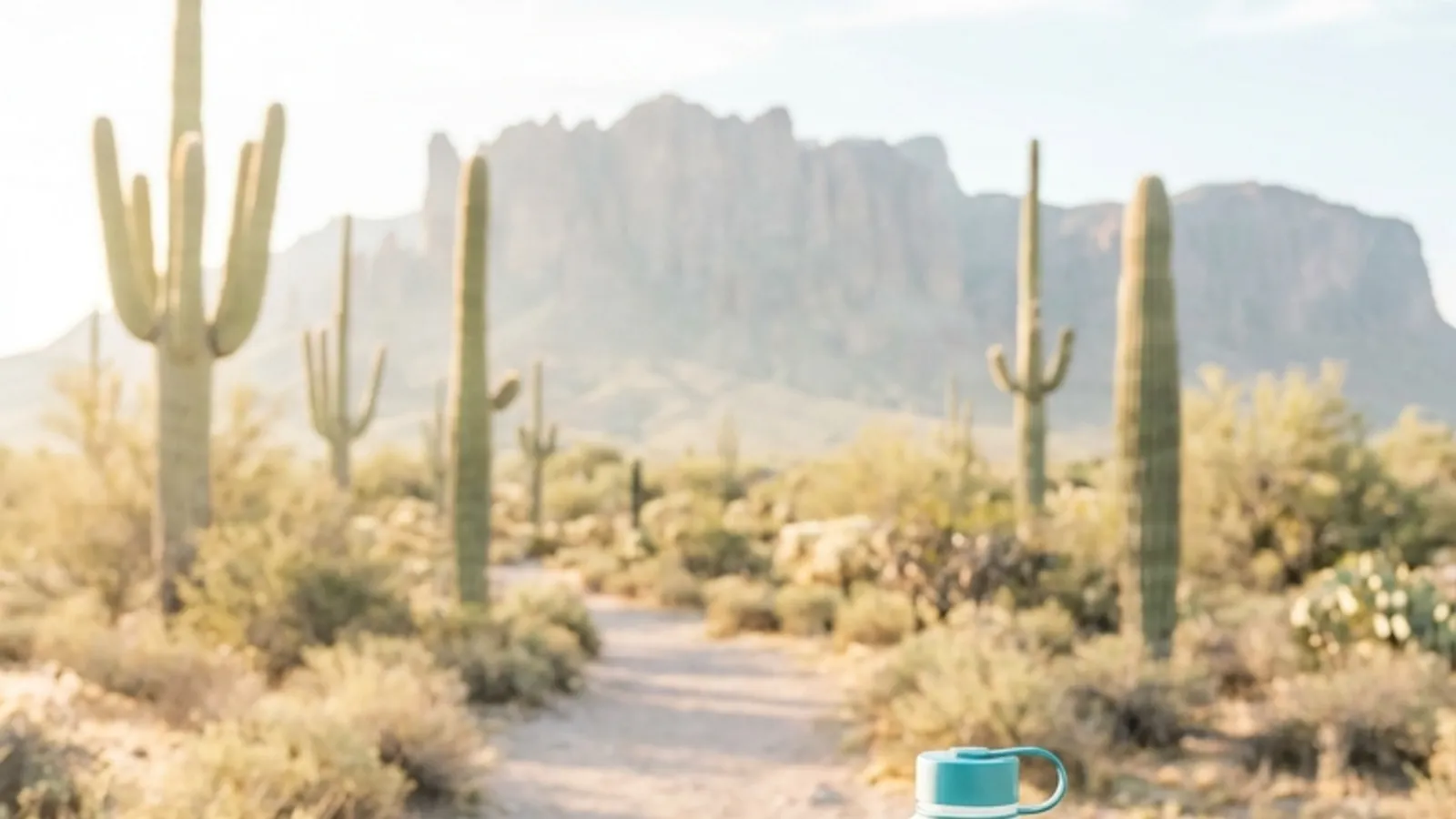
Fall Hiking Recovery IV East Valley: Your Post-Hike Plan
A fall hiking recovery IV in the East Valley is a liter of fluids and electrolytes delivered to your home by a licensed nurse or paramedic after a long day on San Tan or Superstition trails. It is for the hike that left you with a headache, cramping calves, and no appetite, not for the easy loop where a big bottle of water did the job. Most hikers book it the same afternoon and feel better before dinner.
September is when East Valley hikers come back. The heat closures lift, the first mornings dip into the 70s, and everyone who spent summer on a treadmill heads for Goldmine Trail or the Flatiron. The catch is that afternoon highs still sit near 100 degrees for most of the month, and the body that was fit in April is not the body that hiked in June. This guide covers how much fluid a fall hike really costs you, what to do about it, and when a post-hike IV makes sense.
Why fall hiking season hits East Valley hikers harder than they expect
The first cool morning is a trap. It is 74 degrees at the Peralta trailhead at 6 a.m., you feel great, and by the time you turn around at Fremont Saddle it is 95 and climbing. Desert humidity in fall often runs below 15 percent, so sweat evaporates before you notice it, and you lose more fluid than you think you did.
The numbers back this up. Phoenix closed its heat-sensitive trails on 45 days between May and mid-October 2024, and in 2026 the city's fire department has reported more hiker rescues year to date than the year before. Those closures apply to Camelback and Piestewa, not to San Tan Mountain Regional Park or the Superstition Wilderness, which stay open in any weather. East Valley hikers get the freedom, and the responsibility, that comes with it.
Add the fitness gap. A summer of shorter walks and air-conditioned gyms lowers your heat tolerance. Heat acclimatization takes roughly 10 to 14 days of regular exposure, so the first few fall hikes are the ones most likely to end with dizziness, nausea, and a headache that water alone does not touch. Our guide to Arizona heat dehydration symptoms and stages explains how those symptoms progress.
How much fluid a fall hike actually costs you
According to the American College of Sports Medicine, adults exercising in the heat lose roughly 0.5 to 2 liters of sweat per hour, along with 500 to 1,500 milligrams of sodium per liter. Most hikers carry 1 to 2 liters for a half-day hike and drink less than they carry. Here is what that math looks like on the East Valley trails people actually hike in fall.
| Trail | Typical time on trail | Rough fluid loss | What most people carry |
|---|---|---|---|
| Goldmine Trail loop, San Tan Mountain Regional Park | 2 to 3 hours | 1.5 to 4 liters | 1 to 2 liters |
| Peralta Trail to Fremont Saddle, Superstitions | 3 to 4 hours | 2 to 6 liters | 2 liters |
| Siphon Draw to the Flatiron, Lost Dutchman State Park | 4 to 6 hours | 3 to 8 liters | 2 to 3 liters |
| Wind Cave Trail, Usery Mountain Regional Park | 1.5 to 2 hours | 1 to 3 liters | 1 liter |
| Hieroglyphic Trail, Gold Canyon | 2 hours | 1 to 3 liters | 1 liter |
Those are ranges, not measurements, and your own sweat rate depends on pace, body size, and the day. The pattern is what matters: on any hike over two hours, most people finish 1 to 3 liters behind, plus a sodium deficit that plain water does not fix. That deficit is why the headache shows up in the truck on the drive home and why your calves cramp in the shower.
Signs you need more than water after a hike
Mild dehydration responds to fluids, salty food, and rest. The signs that a post-hike recovery has moved past what a water bottle can fix:
- A headache that gets worse, not better, in the two hours after you stop
- Nausea or no appetite, so you cannot get food or fluids down
- Muscle cramps that keep returning after you have stretched and rested
- Dizziness when you stand up, or a racing heart at rest
- Dark yellow urine, or very little urine, four or more hours after the hike
Oral hydration works, but it is slow, and it depends on a stomach that is willing to cooperate. According to Cleveland Clinic, IV fluids reach the bloodstream with close to 100 percent absorption, compared with roughly 20 to 50 percent for fluids you drink. One liter by IV replaces about what 2 to 3 liters of water would over several hours. When you are nauseated, that difference is the whole game.
Fall hiking recovery IV East Valley: what is in the bag
RevivaGo builds two post-hike options, and the right one depends on how the hike went.
- Hydration Boost, $149. One liter of normal saline with electrolytes. This is the pick for the hiker who finished dehydrated but otherwise fine: the headache, the fatigue, the dark urine. Add a B12 shot for $25 if you want an energy lift for the evening.
- Athletic Recovery IV, $229. Saline plus magnesium, B-complex, B12, taurine, and glutathione. This is for the Flatiron day: cramping, sore quads, and a body that feels wrung out. Magnesium supports muscle function, and the B vitamins support the energy metabolism a long climb burns through.
Nausea from the heat? An anti-nausea add-on is available and priced at booking, and your provider can include it in either bag. Every treatment is administered by a licensed RN, NP, or paramedic under physician oversight, with sterile single-use supplies.
You complete a short medical intake at booking, and our medical team reviews it before anyone is dispatched. The full service menu and pricing is posted before you book, and there is no travel fee inside our service area. For more on how the athletic blend works, see our guide to athletic recovery IV therapy for East Valley athletes.
The post-hike recovery plan, step by step
Use this sequence after any East Valley hike longer than two hours.
- Cool down before you drive. Sit in the shade at the trailhead for ten minutes, drink half a liter, and let your heart rate settle. Do not get into a 130-degree car the second you finish.
- Eat something salty within the first hour. Sweat takes sodium with it, and water alone can dilute what is left. Pretzels, a sandwich, or a broth-based soup all work.
- Keep sipping for four hours. Aim for another 1 to 1.5 liters over the afternoon, with electrolytes in at least some of it. Check urine color as you go.
- Book the IV if the signs above are still there at hour two. Headache worsening, nausea, cramps that keep returning, or dizziness on standing mean you are behind by more than sipping will recover before tomorrow. Book from the truck. A provider is usually at your door in 30 to 45 minutes.
- Rest and re-check in the morning. Most hikers who rehydrate properly, by mouth or by IV, wake up ready for the next weekend. If you still feel off, that is a sign to see your doctor.
Timing matters more than most people realize. Our guide to how long IV hydration lasts covers what to expect over the 24 hours after treatment.
Book it from the trailhead, not from a clinic waiting room
The old post-hike plan was to tough it out on the couch. The slightly newer one was to drive to an IV lounge in Scottsdale or Tempe, 45 minutes each way from Queen Creek, while nauseated. Neither is a good plan.
Mobile IV therapy cuts the trip out. You book online from the trailhead parking lot at San Tan or Lost Dutchman, drive home, shower, and a licensed provider meets you there. Treatment takes 30 to 45 minutes on your own couch, with your own shower afterward. As Israel C. wrote in a Google review: "Best IV service in town! They keep me trucking all summer long, no matter how dehydrated I am they always get me ready for another week of working through the AZ heat!"
Hiking groups can book together. If four of you did the Flatiron, one provider can treat the group in one living room, which is the most common way our weekend athletic bookings come in. We serve Queen Creek, San Tan Valley, Gilbert, Mesa, and Apache Junction, which puts every trailhead in this guide inside the service area. Same-day availability is standard, and fall hiking recovery IV East Valley bookings peak on Saturday afternoons, so booking from the trail rather than from the couch two hours later is the smart move.
When a hike needs the ER, not an IV
A recovery IV is for dehydration and muscle fatigue. It is not for heat stroke or muscle breakdown, and knowing the difference matters.
Call 911 or go to the emergency room for confusion, slurred speech, fainting, a body temperature above 103 degrees, hot skin with no sweat, chest pain, or vomiting that will not stop. Cola-colored urine after a hard climb can signal rhabdomyolysis, a muscle breakdown condition that needs hospital fluids and lab monitoring. Our guide to heat exhaustion treatment at home walks through the line between heat exhaustion, which can be managed at home, and heat stroke, which cannot. Our medical intake screens for these red flags, and if your answers point toward the ER, we will tell you before you are charged.
Fall hiking recovery IV East Valley FAQ
Is IV therapy good after hiking?
Yes, IV therapy is a good option after a long hike when you finish with a headache, nausea, cramps, or dizziness that water and food are not fixing. A liter of IV fluids with electrolytes reaches the bloodstream with close to 100 percent absorption and replaces what 2 to 3 liters of oral fluid would over several hours. For a short hike where you feel fine, water and a salty meal are enough.
How soon after a hike should I get an IV?
Book within the first two hours if the symptoms above are still present after you have rested and had half a liter of water. Most hikers rehydrate on their own in that window. If they do not, the sooner fluids go in, the faster the headache and cramps settle, and the more likely you feel normal by evening.
How much does a post-hike IV cost in the East Valley?
RevivaGo's Hydration Boost is $149 and the Athletic Recovery IV is $229, with no travel fee inside the service area. Add-ons are available and priced at booking. The price shown at booking is the price you pay, and treatments are HSA and FSA eligible. IV lounges in Scottsdale and Tempe list similar prices but expect you to drive there.
Can I book an IV for a hiking group?
Yes. One provider can treat a group of hikers at a single address, and group bookings are the most common way our weekend athletic recovery visits come in. Each person completes a short medical intake at booking so the medical team can review every treatment before the provider arrives.
Can I get IV hydration before a hike instead?
You can, and some hikers do before a big Superstition day. For most people, a pre-hike IV is less useful than starting well hydrated the day before and carrying more water than you think you need. Our guide to pre-workout IV hydration covers what the research says and who benefits most.
Ready for the trail?
Fall hiking season in the East Valley is short and worth every weekend. Carry more water than you think you need, eat something salty on the way home, and know the signs that mean you are behind. When a hike leaves you flatter than it should, the fall hiking recovery IV East Valley hikers book most often is a liter of fluids at home in under an hour, delivered by a licensed provider who has seen a lot of Flatiron afternoons.
Book your post-hike IV before you leave the trailhead, and be ready for next weekend.
RevivaGo proudly serves Queen Creek, Gilbert, San Tan Valley, and the greater East Valley area. All treatments are administered by licensed healthcare professionals under physician oversight.