Turkey Trot Recovery: East Valley Race Day Guide
Turkey trot recovery is the few hours between crossing a Thanksgiving morning 5K or 10K finish line and sitting down to a large, salty holiday meal. Done well, it means replacing the fluid and sodium you sweated out, eating a small carb-and-protein snack, and pacing the drinks so the feast and the race do not stack into a headache by dinner.
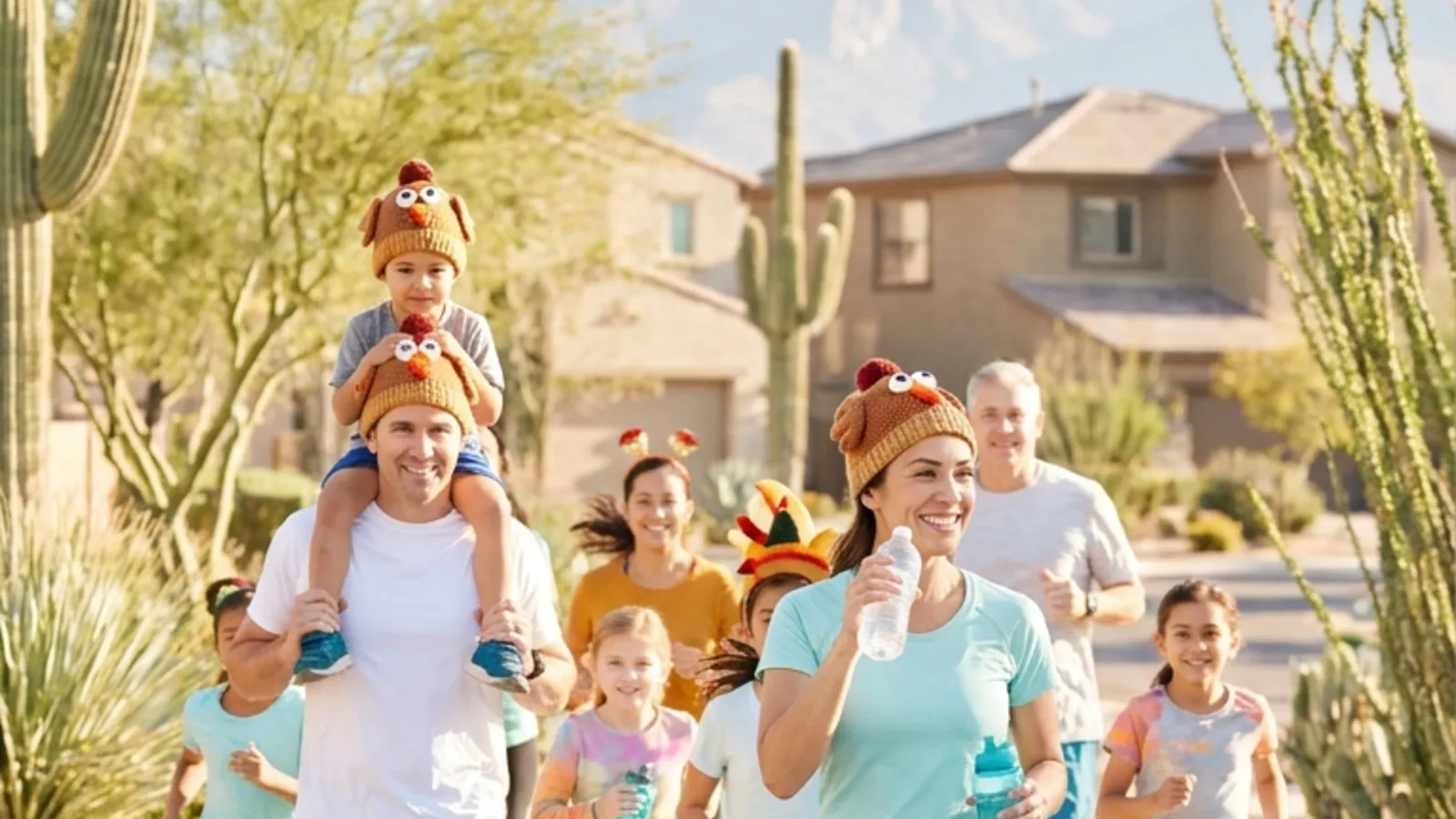
On Thursday, November 26, 2026, thousands of East Valley families will lace up before the oven goes on. For a lot of households in Gilbert, Mesa, Queen Creek, and San Tan Valley, the race is the tradition: matching turkey hats, a stroller in the 1-mile fun run, a cousin who only runs once a year. This guide is the race-day checklist our providers wish every runner had, from the night before to the last slice of pie.
East Valley turkey trots on Thanksgiving 2026
Two established East Valley races have 2026 registration pages live as of early November. Start times below come from each race's registration listing, so confirm them there before you set an alarm.
| Race | Location | Distances | Listed start times |
|---|---|---|---|
| Gilbert Turkey Trot | San Tan Mall area, Gilbert | 5K, 1-mile Family Fun Run | Fun run 8:30 a.m., 5K 9:00 a.m. (RunSignup) |
| Mesa Turkey Trot 5K - 10K | Red Mountain Park, Mesa | 10K, 5K, 1-mile fun run/walk, virtual | 1 mile 8:00 a.m., 10K 8:20 a.m., 5K 8:40 a.m. (Race Roster) |
The Gilbert race gives 100 percent of proceeds to local nonprofits serving children, according to its RunSignup page. It is also a short drive for Queen Creek and San Tan Valley families, since we could not find a verified 2026 turkey trot inside either town. The Mesa race adds a 10K for runners who want a longer effort.
Both races start between 8:00 and 9:00 a.m., which matters for hydration. You will finish mid-morning, and most families eat somewhere between 1:00 and 5:00 p.m. That gap is your turkey trot recovery window.
Why November air still dehydrates East Valley runners
Thanksgiving morning in the East Valley often starts cool, sometimes in the 40s or 50s, and warms into the 70s by afternoon. Cool air makes it easy to forget you are sweating. The bigger issue is how dry it is. Low humidity lets sweat evaporate almost as fast as it forms, so your shirt stays dry while you lose fluid.
How much you lose varies more than most people expect. A 2017 review by Lindsay Baker in Sports Medicine found that whole-body sweat rates in athletes commonly range from about 0.5 to 2 liters per hour, and sweat sodium concentration can differ several-fold from one person to the next. A 30-minute 5K might cost a casual runner half a liter. A hard 10K in a costume could cost a heavy sweater over a liter.
The American College of Sports Medicine's 2007 position stand on exercise and fluid replacement sets the practical target: avoid losing more than about 2 percent of your body weight in fluid. For a 160-pound runner, that is roughly 3 pounds. Beyond that line, the ACSM notes that endurance performance tends to drop and the effort feels harder.
Turkey trot recovery starts the night before
The best turkey trot recovery plan starts on Wednesday, because what you drink the night before shapes how you feel at 2:00 p.m. on Thursday.
- Hydrate Wednesday afternoon. Spread normal fluid intake through the day rather than chugging at bedtime. Pale yellow urine is a reasonable sign you are on track.
- Go easy on Wednesday drinks. The night before Thanksgiving is one of the biggest bar nights of the year. One or two drinks with water in between is a very different start line than five.
- Drink early on race morning. The ACSM suggests about 5 to 7 milliliters per kilogram of body weight at least 4 hours before exercise. For a 160-pound runner, that is about 12 to 16 ounces when you wake up.
- Add a little salt. A salty breakfast or an electrolyte drink helps you hold onto that fluid instead of running to the porta-potty line.
- Eat light. Toast with peanut butter or a banana 60 to 90 minutes before the start is plenty for a 5K.
Post-race refuel before the feast
The most common turkey trot mistake we see is skipping food after the race to "save room" for dinner. You arrive at the table depleted, thirsty, and more likely to overeat and overdrink.
Drink to replace what you lost. The ACSM recommends about 1.5 liters of fluid for every kilogram of body weight lost, because you keep losing some through urine as you rehydrate. If you weigh yourself before and after, a 2-pound drop means roughly 1.4 liters (about 48 ounces) over the next few hours.
Eat a small recovery snack within an hour. Chocolate milk, yogurt with fruit, or eggs and toast all work. A little carbohydrate and protein starts the refuel, and sodium from the snack helps you keep the fluids you are drinking.
Hold the mimosa until you have rehydrated. A 1997 study by Shirreffs and Maughan in the Journal of Applied Physiology found that after exercise-induced dehydration, drinks containing 4 percent alcohol increased urine output compared with lower-alcohol drinks, which slowed fluid recovery. Water first, then celebrate.
How a salty feast and drinks stack on race-day fluid loss
A Thanksgiving plate is salty by design. Brined turkey, gravy, stuffing, ham, and rolls add up fast, and the Calorie Control Council has estimated that a typical Thanksgiving dinner can top 3,000 calories. Some sodium after a race is useful. A very salty meal on top of a fluid deficit, plus wine or beer through the afternoon, is how many people end up with a pounding headache, puffy hands, and a rough Friday.
Here is how the day usually stacks up:
| Time | What is happening | What helps |
|---|---|---|
| Race (8:00 to 10:00 a.m.) | Sweat loss in dry air, often unnoticed | Pre-race fluids and a little salt |
| Late morning | Fluid deficit, low glycogen | Snack plus 1.5 L per kg lost |
| Dinner | High-sodium, high-calorie meal | Water glass beside every drink |
| Evening | Alcohol adds to fluid loss, sleep suffers | Stop drinking 2 to 3 hours before bed |
| Friday morning | Headache, fatigue, sore legs | Fluids, an easy walk, or an IV if you feel flat |
Bottom line: the race alone rarely causes trouble. The combination of race, salt, alcohol, and a short night is what leaves people feeling worse than they expected. If Friday's main problem is the wine rather than the race, our Thanksgiving hangover recovery guide covers that side of the holiday.
First-timer and kids' turkey trot tips
Turkey trots pull in a lot of people who do not run the other 364 days. That is half the fun, and it is also why a few simple turkey trot recovery habits matter.
For first-timers:
- Start at a walk-jog pace for the first half mile. Crowded starts push everyone too fast.
- Wear shoes you have already walked in. Thanksgiving is not the day to break in new ones.
- Skip the costume layer if it does not breathe. Feathered turkey suits trap heat even on a cool morning.
- Expect sore calves on Friday. An easy walk usually helps more than lying still.
For kids in the 1-mile fun run:
- Give them a few sips of water before and after, even if they say they are not thirsty. The American Academy of Pediatrics' 2011 policy statement on climatic heat stress advises scheduled drinking for active children, since thirst lags behind need.
- Pack a salty snack like pretzels or crackers for the car.
- Watch for unusual crankiness, headache, or flushed skin after the race. In kids, these can be early signs of being low on fluids.
If your family does tournaments and race weekends year-round, our guide to youth sports tournament recovery in Arizona goes deeper on keeping kids hydrated.
When an IV may help with turkey trot recovery
Most turkey trotters recover fine with water, food, and rest. An IV may help when you finish with a headache, nausea, cramping, or dizziness that is not improving after an hour of fluids and a snack, or when you know the day will be long, salty, and short on sleep.
IV fluids go directly into the bloodstream, so absorption is close to 100 percent, while Cleveland Clinic material on hydration notes oral fluids are absorbed more slowly through the gut. One liter of IV fluid can replace a deficit that would take several hours to drink back. Learn more about IV hydration and how it works.
| Option | What it includes | Price | Best fit |
|---|---|---|---|
| Water and electrolytes | Oral fluids, salty snack | Grocery cost | Mild thirst, felt fine after the race |
| Hydration Boost IV | A liter of IV fluids with electrolytes | $149 | Dry, headachy, or lightheaded after a 5K |
| Athletic Recovery IV | Hydration plus glutathione, B12, B-complex, magnesium, and taurine | $229 | 10K runners, sore legs, or a big weekend ahead |
Bottom line: if you only feel dry, the $149 Hydration Boost is usually enough. If you raced hard, sweat heavily, or are hosting through Friday, the Athletic Recovery IV adds vitamins and minerals many active clients choose after longer efforts. You can compare every option on our full treatment menu.
A licensed RN, NP, or paramedic comes to your home, and every order is reviewed under the physician oversight of our medical team, led by Michael Johnson, NP. Treatment usually takes 30 to 45 minutes, so it fits between the race and the turkey coming out of the oven. Competitive athletes subject to WADA or USADA rules should note that IV infusions over 100 mL per 12 hours are restricted outside of clinical care.
What is the best way to recover from a turkey trot?
The best turkey trot recovery plan is to drink about 1.5 liters of fluid for every kilogram of weight lost, eat a small carb-and-protein snack within an hour, and delay alcohol until you are rehydrated. Take an easy walk later in the day and get a full night of sleep.
How much water should I drink after a 5K?
Most recreational runners need roughly 16 to 32 ounces after a 5K, depending on pace, sweat rate, and clothing. The ACSM guideline is about 1.5 liters per kilogram of body weight lost. Weighing yourself before and after the race is the simplest way to know your own number.
Is it bad to drink alcohol after a turkey trot?
A drink or two after you have rehydrated is unlikely to cause problems for most healthy adults. Drinking before replacing race-day fluid loss can slow rehydration, according to Shirreffs and Maughan's 1997 research, and adds to dehydration from a salty meal. Alternate every drink with a glass of water.
Can I get an IV on Thanksgiving morning in the East Valley?
Yes. RevivaGo books holiday visits across Gilbert, Mesa, Queen Creek, San Tan Valley, and the rest of our service area, with no travel fee. Holiday slots tend to fill early, so pre-booking Thanksgiving morning or Black Friday is the safest way to get the time you want. See our Gilbert service area and Mesa service area pages for coverage details.
Should I get an IV before or after a turkey trot?
For a 5K or 10K, after is usually more useful, once you know how you feel. A pre-race IV makes more sense for longer events or for people who start the day already depleted. Our guide to pre-workout IV hydration explains who benefits from going before.
How long does it take to recover from a Thanksgiving 10K?
Most casual runners feel normal within one to two days after a 10K, with sore legs peaking around 24 to 48 hours. Fluids and sleep on Thursday night make the biggest difference. For longer races, our marathon recovery guide covers a full hour-by-hour plan.
Ready to enjoy the whole day?
The race is the easy part. Good turkey trot recovery is mostly about the hours after: water before mimosas, a snack before the feast, and a little salt with your fluids. Do that and you get to enjoy dinner instead of fighting a headache through it.
If you want a head start, book a Thanksgiving morning or Friday IV now while holiday slots are still open. Our athletic recovery guide for East Valley athletes and FAQ answer the rest. See you at the start line.
This article is for general education and is not medical advice. If you have chest pain, confusion, fainting, or cannot keep fluids down, seek emergency care.
RevivaGo proudly serves Queen Creek, Gilbert, San Tan Valley, and the greater East Valley area. All treatments are administered by licensed healthcare professionals under physician oversight.