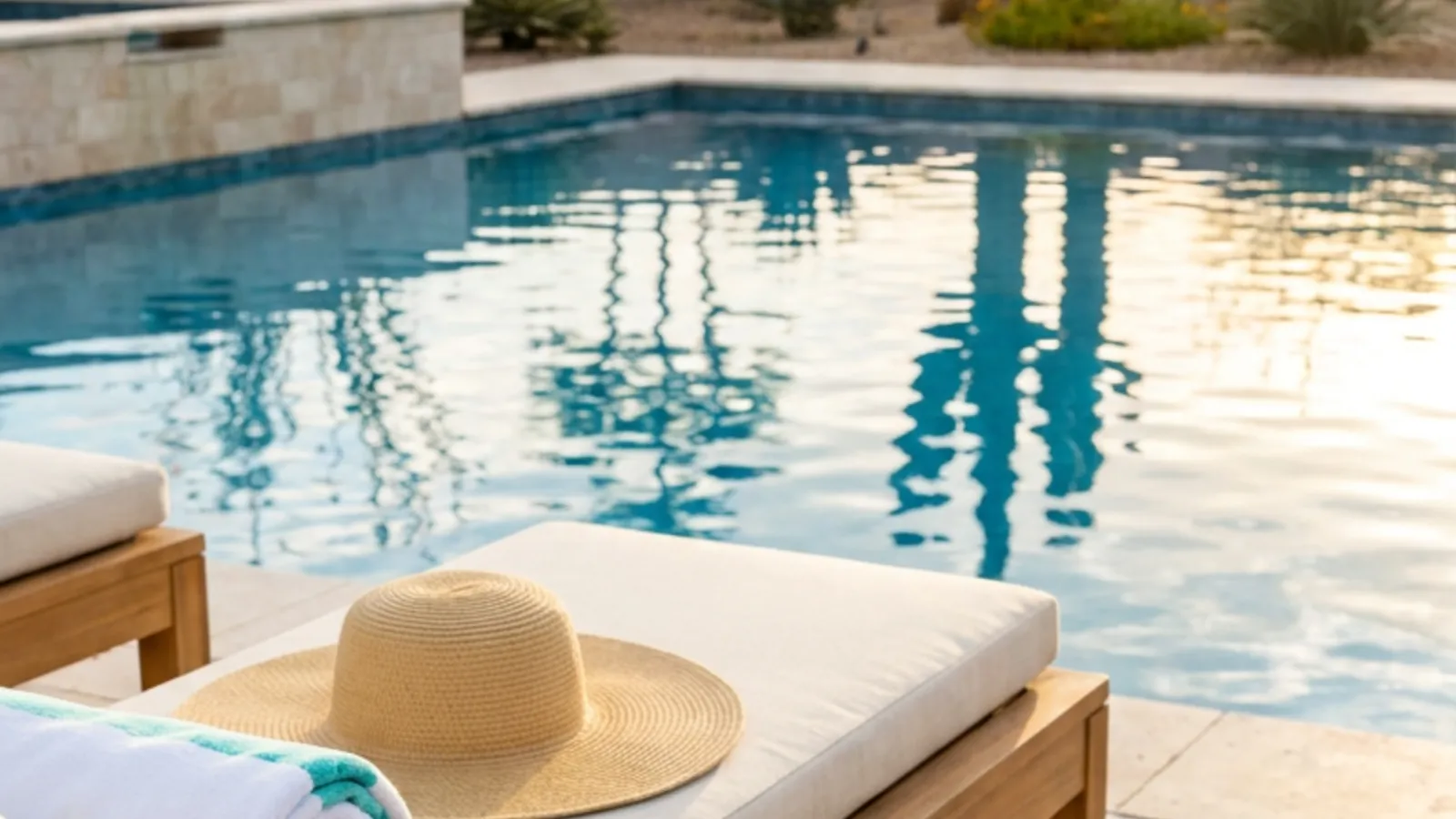
Pool Day Recovery IV Arizona: Family Hydration Reset
Pool day recovery IV Arizona is a 30-to-45-minute mobile IV hydration session, scheduled the evening of or morning after a long Arizona pool day, that resets the silent dehydration stack of chlorine exposure, high UV load, 110-degree deck heat, and the inevitable mix of margaritas and sodas that displaced your electrolyte intake. The result is the difference between a Sunday at the pool that ends Sunday night and one that ruins your Monday.
In the East Valley, the pool day looks innocent. A few hours in the water, a White Claw or three, kids in floaties, music on the Bluetooth, sunscreen reapplied (sometimes), and back inside by 6pm. Then Monday morning hits like a freight train, and you spend until Wednesday trying to figure out why a "relaxing" weekend left you flat. The answer is almost always hydration math you did not see coming.
This guide is for the East Valley families and weekenders who want to enjoy the pool without paying for it on Monday. Below: why Arizona pool days drain you so much faster than they should, the pre-during-post hydration protocol our team gives patients, when an IV is the smart next move, and how the family plan changes when kids are part of the picture.
Why Arizona pool days dehydrate you faster than you think
Pool days do not feel dehydrating. You are surrounded by water. You are cooler than you would be on dry land. You are drinking something with every couple of laps. None of that maps to what is actually happening to your body. Five mechanisms stack inside a typical Arizona pool day.
Chlorinated water pulls moisture from your skin. Chlorine is osmotically active. It draws water out of your skin and through your cell membranes in small but cumulative amounts during a multi-hour soak. Your skin stays wet on the outside while it dries on the inside.
Sun exposure burns through electrolytes you cannot see. Arizona summer UV indexes regularly hit 11 (extreme) by late morning. According to the National Weather Service and EPA UV index data, sustained UV exposure above 8 increases sweat rate by 20 to 40 percent even when the air feels cooler near water. You sweat constantly while sitting on the deck. You just cannot feel it.
The pool deck is a heat radiator. Pavers, concrete, and travertine in direct Arizona sun routinely hit 130 to 160°F surface temperatures by 1pm. Your feet, your towel, and the chair you are sitting on all radiate heat back up at you. Your body fights to dump heat through skin blood vessels and sweat, even while the pool water keeps your core temperature steady.
Drink choices displace electrolyte intake. Beer, hard seltzer, margaritas, and soda are not hydration. They are net fluid contributors with diuretic effects and zero electrolytes. A typical Saturday pool day involves 3 to 6 of these for the average adult, replacing the 60 to 100 ounces of electrolyte water and salt-rich foods your body actually needed.
The AC reset finishes the job. You come inside at 6pm to a 75°F house with single-digit indoor humidity from the AC. Your respiratory tract loses water through every breath while you wind down. By 10pm, you are 2 to 3 liters down on body water and you have no idea, because everything since the pool felt fine.
If you want the deeper science on how desert air silently moves fluid out of your system, our Arizona heat dehydration symptoms and treatment guide covers the stage-by-stage picture.
The pool day rebound pattern
Patients describe the same arc almost word for word. Recognizing it is the first step in planning around it.
| Day | What people feel | What is actually happening |
|---|---|---|
| Saturday afternoon at the pool | Relaxed, having fun, "drinking plenty" | Net negative fluid balance, accumulating electrolyte loss |
| Saturday evening | A little tired, mild headache, "must be the sun" | 1 to 2 percent down on body water, electrolytes off |
| Sunday morning | Dragging, foggy, mild nausea, dark urine | 2 to 3 percent dehydration, sodium and potassium low |
| Monday morning | Flat, headache, low energy, "I cannot believe a pool day did this" | Still rebuilding, sleep was poor, training compromised |
| Tuesday | Mostly recovered, productivity bounced back | Most adults reach baseline 48 to 72 hours later |
Bottom line: the pool day was not the problem. The 72 hours that followed were the problem, and they cost you a full week of work, training, or family bandwidth. A planned hydration recovery cuts that arc in half.
The pool day hydration protocol: before, during, after
This is the playbook we share with patients heading into a known pool weekend. Adapt to your situation.
Before the pool day
- Pre-hydrate 60 to 90 minutes before. 16 to 20 ounces of water with electrolytes. Sodium is the single most underrated ingredient in summer hydration.
- Eat sodium-rich foods. Broth, salted snacks, deli meat, olives. Most people get plenty of potassium but run low on sodium, especially if they already eat low-sodium at home.
- Sunscreen heavily, then again every 90 minutes. Sunburned skin loses 20 to 30 percent more fluid than healthy skin during the next 48 hours of recovery.
During the pool day
- Set a 30-minute water timer. Drinking when you remember is not the same as drinking on a schedule.
- If you are drinking alcohol, alternate. One alcoholic drink, one electrolyte water. If that ratio sounds like a lot of water, your math is correct.
- Take shade breaks every 60 to 90 minutes. Just 10 minutes out of direct sun resets your sweat rate.
- Eat regularly. Not chips. Real food with sodium and protein.
After the pool day
- Continue electrolytes for 2 to 4 hours after you come inside. This is the window most people miss.
- Watch for warning signs. Headache that does not respond to water, persistent fatigue, darker yellow urine that does not normalize within 24 hours.
- Book an IV before symptoms compound. If you have a Monday morning meeting, a hard training week ahead, or kids who need a functional parent, this is the lever.
For athletes who pair pool days with training weeks, our pre-workout IV hydration guide covers the front-loading angle in detail.
The case for a pre-planned pool day recovery IV Arizona session
Most people think of IV hydration as something you book when you feel terrible. The smarter East Valley families think of it like a reservation: scheduled before the deficit gets large, treated as part of the weekend plan rather than the emergency response.
A pool day recovery IV Arizona session works best in one of two timing windows. The evening of, scheduled around 7 to 9pm after the pool day wraps, restores fluid balance before sleep and prevents the worst of the next-morning rebound. The next morning, scheduled before 10am, addresses the deficit when it is most measurable and gets you functional before the day spirals.
This is the same logic our Arizona summer IV therapy prep and survival guide applies to the broader summer cadence. Pool days are one of the largest predictable stress events on a summer calendar. Planning around them is the move.
What is in a pool day recovery IV
The protocol our team typically uses for a post-pool-day visit is built around four ingredients with optional add-ons depending on symptoms.
- 1 liter of normal saline with electrolytes. The foundation. IV fluids restore plasma volume at full bloodstream concentration, compared with the 20 to 50 percent absorption rate of oral fluids cited in Cleveland Clinic research.
- B-complex vitamins. Replenishes what depletes during high-stress days and supports cellular energy through the recovery window.
- Vitamin C, optional. Addresses the oxidative load that comes with extended UV exposure.
- Toradol, optional. For the headache that water alone cannot touch, especially when sunburn is part of the picture.
- Anti-nausea (Zofran), optional. When alcohol and sun stacked up enough that morning fluids will not stay down.
Treatment runs 30 to 45 minutes. Most clients report meaningful improvement before the bag is empty. The full visit, from booking to feeling human again, usually lands inside 90 minutes.
When you need an IV vs water and rest
Not every pool day needs an IV. Match the response to the symptoms.
| Sign | Water and rest | Book an IV | Call a doctor or urgent care |
|---|---|---|---|
| Mild fatigue, slightly dark urine | Yes, with electrolytes | If a hard week follows | |
| Persistent headache, mild dizziness | Try first | If unresolved after 2 hours | |
| Severe nausea, cannot keep fluids down | Yes | If vomiting continues past 4 hours | |
| Confusion, fever, cannot stand | Yes, immediately | ||
| Sunburn + dehydration combo | If mild | If moderate to severe | If signs of heat illness |
| Cramping and very dark urine | Yes | If pain or weakness escalates |
Bottom line: mild and resolving = water and electrolytes. Moderate and stalling = IV. Severe or escalating = doctor or 911. The line between IV and doctor maps to our heat exhaustion treatment at home guide, which covers the triage when symptoms cross the boundary.
The family pool day plan
Solo recovery is simple. Family recovery is where the plan tends to fall apart. A few principles help.
Adults 50 and older. Thirst response declines with age. Several common medications (diuretics, beta-blockers, blood pressure medication) reduce heat tolerance further. This group benefits most from a pre-planned IV after a long pool day, particularly during the June-through-September window.
Adults under 50 with active training. A Saturday pool day plus a Sunday long run or CrossFit session is a recipe for a Tuesday flat day. Schedule an IV between the two if you have a hard training week ahead.
Kids 12 and under. Children dehydrate faster than adults but need a different plan. Frequent water with electrolyte powder mixed in, regular snacks with sodium, and aggressive sunscreen are the baseline. IV therapy is appropriate for kids only when clinically indicated by a provider, not as routine maintenance. Watch for headache, irritability, or unusually quiet behavior. Those are early signs of dehydration in children that adults often miss.
Teenagers. Most teens drastically underestimate water needs and will refuse electrolyte products that taste medicinal. Coconut water, low-sugar sports drinks, and watermelon slices work better than plain water bottles in our experience.
Big group days. Pick a designated hydration manager. One adult tracks who has had water in the last 30 minutes and who needs a shade break. Sounds dorky. Works.
Pre-booking the family IV slate. Memorial Day, Fourth of July, Labor Day weekends. The adults who plan ahead for big-pool-weekend events tend to schedule their IV slots in advance, like restaurant reservations. Same-day availability is usually open across the East Valley but Sunday evening is the busiest stretch of summer for mobile IV. Our same-day mobile IV therapy across the East Valley guide has the dispatch details.
When pool day recovery overlaps with hangover territory
Many pool days end with more drinks than the cooler accounted for. There is no point pretending otherwise. The IV protocol shifts slightly when alcohol is the dominant factor.
A standard pool day recovery IV is hydration plus electrolytes plus B-complex. A hangover-leaning IV adds anti-nausea medication and often Toradol for the headache, and uses a heavier saline volume to dilute residual ethanol metabolites. Our hangover IV East Valley service and our hangover cure that actually works guide cover the science and the protocol differences.
If you woke up unsure whether your symptoms are pool-day dehydration or hangover, the honest answer is that they are usually both. The good news: the IV ingredients overlap heavily, and your clinician can adjust the formula based on what you are feeling.
Frequently asked questions
What is the best IV for pool day recovery in Arizona?
The best pool day recovery IV Arizona protocol starts with 1 liter of normal saline plus electrolytes, B-complex vitamins, and optional vitamin C for sun exposure. Anti-nausea medication and Toradol are added when alcohol or sun-headache is part of the picture. For most adults, the Basic Hydration IV at $149 covers it. Athletes and adults dealing with sunburn often add the Athletic Recovery or Immunity Boost upgrades.
How soon after a pool day should I get an IV?
The two highest-leverage windows are the evening of the pool day (7 to 9pm) and the next morning before 10am. The evening session restores fluid balance before sleep and prevents the worst next-day symptoms. The morning session addresses the deficit when it is most measurable and gets you functional before symptoms compound. For multi-day pool weekends, an IV after day two is often the smarter timing.
Can my whole family get IVs after a pool day?
Adults can. Children under 13 generally should not unless clinically indicated by a provider, and pediatric IV hydration is not part of RevivaGo's standard mobile service. For kids, the better protocol is frequent water with electrolyte powder, regular salty snacks, and shade breaks. If a child is showing signs of dehydration (lethargy, fewer wet diapers, dry mouth, no tears when crying), the right call is your pediatrician or urgent care, not a wellness IV.
How is a pool day recovery IV different from a hangover IV?
A pool day recovery IV addresses hydration loss from sun, chlorine, and dry desert air with saline, electrolytes, and B-complex. A hangover IV adds anti-nausea medication (Zofran) and often Toradol for the headache, with a slightly larger saline volume to dilute ethanol metabolites. The two protocols overlap heavily because most pool days that need an IV include alcohol. Your clinician adjusts the formula based on your specific symptoms during the medical intake.
How much does a pool day recovery IV cost?
The RevivaGo Basic Hydration IV starts at $149 with electrolytes, no travel fees inside the East Valley service area. A B12 shot adds $25, and other add-ons (vitamin C boost, Toradol) are priced at booking. If nausea is part of the picture, Nausea Relief at $179 already includes anti-nausea medication. We do not bill insurance. The visit is HSA and FSA eligible for many clients. For a full cost comparison versus urgent care and ER pricing on similar treatments, see our IV therapy cost without insurance guide.
Can I get a pool day recovery IV at home in Queen Creek?
Yes. RevivaGo delivers pool day recovery IV therapy directly to homes, hotels, and short-term rentals across Queen Creek, Gilbert, Mesa, San Tan Valley, Apache Junction, Higley, and Chandler. Same-day appointments are typical throughout summer, and most East Valley addresses see a clinician within 30 to 45 minutes of booking. Sunday evening is the busiest dispatch window of the week from June through September, so booking by midday Sunday increases your odds of an early-evening slot.
Save the Monday before you lose it
Arizona pool days are some of the best parts of summer in the East Valley. They are also one of the largest predictable hits to your hydration tank between June and September. The difference between a Sunday at the pool that ends Sunday night and one that costs you Monday and Tuesday is rarely about the pool. It is about the 24 hours of recovery you build around it.
A RevivaGo clinician can be at your Queen Creek, Gilbert, San Tan Valley, or Mesa door in about 30 to 45 minutes. Book a pool day recovery IV Arizona session for the night of or morning after your next big weekend, or explore the full service menu to plan ahead for the rest of summer.
RevivaGo proudly serves Queen Creek, Gilbert, San Tan Valley, and the greater East Valley area. All treatments are administered by licensed healthcare professionals under physician oversight. This article is educational and not medical advice. For children showing signs of dehydration or for any severe symptoms, contact your pediatrician, urgent care, or 911 instead of a mobile IV.