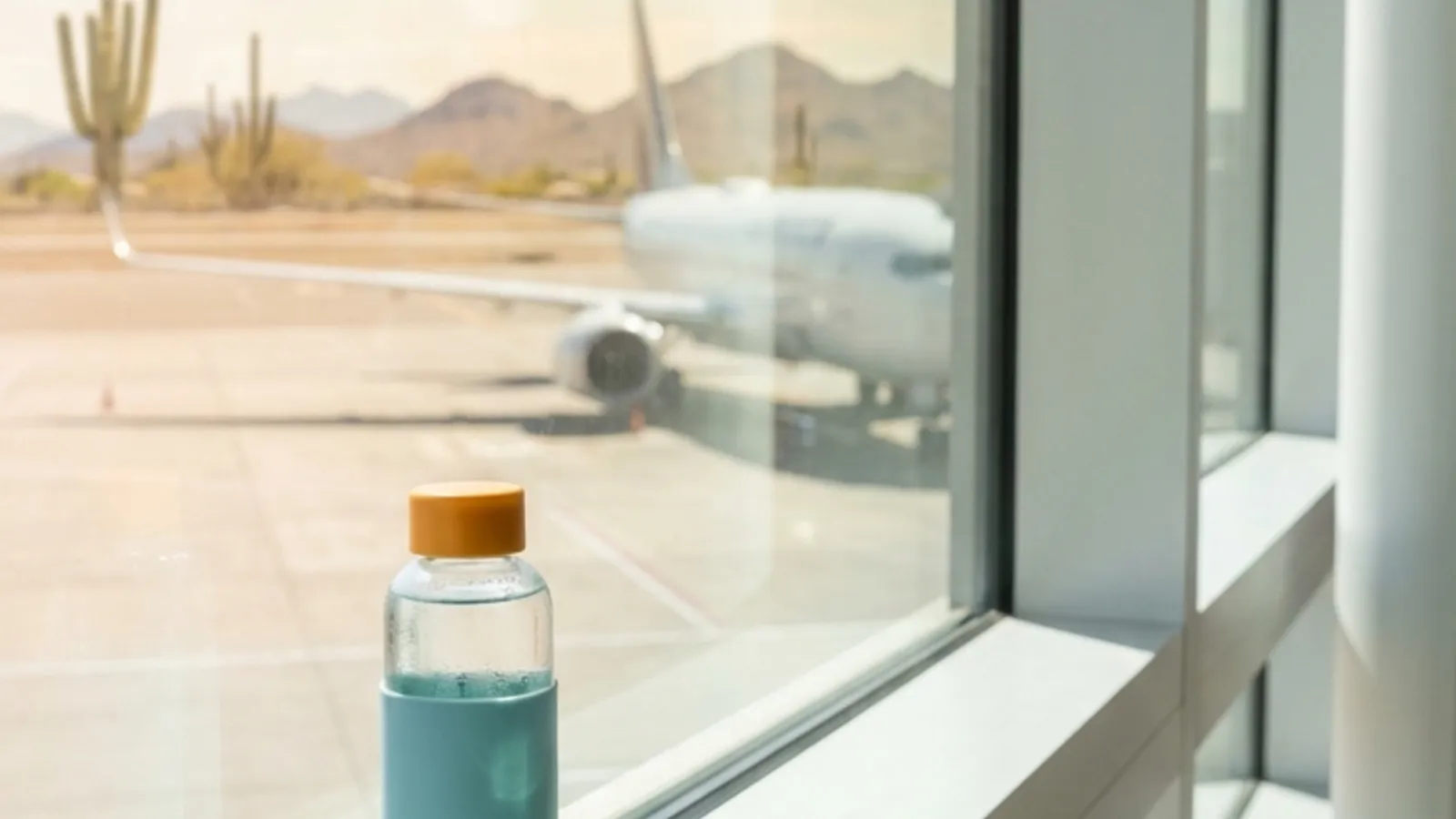
Phoenix Airport Travel Dehydration: IV Recovery Guide
Phoenix airport travel dehydration is the fluid deficit you land with after a dry airplane cabin, a few small cups of coffee, and a walk into 110-degree heat at Sky Harbor or Mesa Gateway. A travel dehydration IV replaces that deficit with one liter of fluids and electrolytes delivered by a licensed provider at your hotel, Airbnb, or home, usually within an hour of you clearing baggage claim. It is not about time zones. That is jet lag, and we cover it separately. This is about the specific way flying into the desert drains you.
If you have ever landed in Phoenix in July feeling fine, then hit a wall by the time the rental car shuttle dropped you off, this page explains why and what to do about it.
Why flying into Phoenix dehydrates you more than flying anywhere else
Three things stack on a flight into the Valley. Any one of them is manageable. Together, they explain the headache you get before you reach the Loop 202.
The cabin is drier than the desert. According to the UK Civil Aviation Authority, cabin humidity at cruising altitude typically sits between 10 and 20 percent, compared with 40 to 50 percent in a normal building. Research on long-haul flights found cabin humidity dropping below 10 percent within two hours of takeoff. At that dryness, the water you lose just by breathing roughly doubles, from about 160 mL per hour to around 360 mL per hour.
What you drink on board works against you. Coffee and alcohol are both mild diuretics, and the four-ounce cup of water the flight attendant hands you does not offset either. The Aerospace Medical Association suggests about eight ounces of water for every hour in the air, and most passengers do not get close.
You land in the hottest place you have been all year. Phoenix's official temperature is measured at Sky Harbor. Summer afternoons there routinely hit 105 to 115 degrees, and the tarmac, curbside, and rental car lot run hotter. Mesa Gateway is smaller but sits on open ground in the East Valley with the same sun. Your body starts sweating hard the moment you step outside, and you are already behind from the flight.
Then comes the drive. Sky Harbor to Queen Creek is about 40 minutes in a car that was parked in the sun. By the time you unlock the front door, a three-hour flight has cost you the better part of a liter.
Where the fluid goes on a flight to Phoenix
| Stage | What happens | Typical fluid cost |
|---|---|---|
| Morning of travel | Skipped breakfast, coffee, security line, no water bottle | 200 to 400 mL behind before boarding |
| 3-hour flight | Breathing in 10 to 20 percent humidity, one small drink | 500 mL to 1 liter of insensible loss |
| Layover | More coffee or a beer, walking terminals | Another 200 to 500 mL |
| Landing at Sky Harbor or Mesa Gateway | Curbside, shuttle, rental car in 110-degree heat | Sweat losses begin immediately, 0.5 to 1 liter per hour in heat |
| Drive to the East Valley | Hot car, air conditioning drying the cabin | Ongoing loss |
Bottom line: A domestic flight into Phoenix in summer can easily put you one to two liters behind before you have unpacked. That is the range where headache, fatigue, and dizziness show up, and where a full liter by IV makes a noticeable difference.
Signs you landed dehydrated
Most people blame the flight, the early alarm, or the airport food. These are the signs it is fluid, not fatigue:
- Headache that started on descent or in the car
- Dry eyes, dry lips, and a scratchy throat that water is not fixing
- Dizziness or lightheadedness when you stand up from the rental car
- Dark yellow urine, or not needing to go for hours
- Swollen ankles and feet from sitting, made worse by the heat
- Fatigue out of proportion to a three-hour flight
- Feeling worse two hours after landing than you did on the plane
If you also have confusion, a racing heart that does not settle, or you have stopped sweating in the heat, that is heat illness and needs an emergency room, not an IV at your hotel. Our Arizona heat dehydration guide walks through the stages.
How to fly into Phoenix without landing wrecked (step by step)
- Drink 16 to 20 ounces of water before security. Start the flight even, not behind. Add an electrolyte packet if you are flying in summer.
- Bring an empty bottle and fill it past security. Aim for eight ounces every hour in the air, per Aerospace Medical Association guidance. Skip the second coffee.
- Go easy on alcohol at altitude. One drink on a flight into Phoenix costs more than one drink at home, because you are already losing water through your breath.
- Drink again before you leave the terminal. Sky Harbor and Mesa Gateway both have bottle-filling stations. Twelve ounces before you walk out into the heat matters more than anything you drank in the air.
- Do not sit in a hot car. Let it cool with the doors open for a minute. Sweating in a 130-degree car on the way to Gilbert undoes your last bottle of water.
- Reassess two hours after landing. If you feel better, keep drinking and rest. If you feel worse, oral fluids are losing the race, and that is when a same-day mobile IV is the right call.
When a travel dehydration IV makes sense
Oral hydration works when you are mildly behind and have time. It does not work well when you are one to two liters down, nauseated from the heat, and have somewhere to be. These are the travelers who book with us most often after landing:
- Wedding guests flying in for a Saturday ceremony at a Queen Creek venue who need to look and feel human at 4 p.m.
- Business travelers with meetings in Chandler or Gilbert the same afternoon.
- Families visiting grandparents in San Tan Valley, arriving with kids who are cranky and parents who are worse.
- Snowbirds returning in the fall to Mesa or Apache Junction after a long travel day, often managing blood pressure or other conditions where dehydration hits harder.
- Summer visitors who did not believe the forecast until they stepped outside.
A Hydration Boost IV is one liter of fluids with electrolytes for $149. If you spent the flight in a crowded cabin fighting off a cold, the Immunity Support IV adds high-dose vitamin C and zinc for $209. If you drank on the flight or at the layover bar and landed with a hangover on top of the dehydration, Hangover Relief at $229 includes anti-nausea medication. Full pricing is on our patient services page.
How airport-to-door timing works in the East Valley
We do not treat patients at the airport. We come to a private address inside our service area: a home, hotel, or short-term rental. The timing works in your favor because our providers typically arrive 30 to 45 minutes after booking, which is about how long it takes to get from baggage claim to the East Valley.
| Airport | Drive to Queen Creek | Drive to Gilbert | Drive to Mesa |
|---|---|---|---|
| Phoenix Sky Harbor (PHX) | About 40 to 45 minutes | About 30 minutes | About 20 to 25 minutes |
| Phoenix-Mesa Gateway (AZA) | About 15 minutes | About 15 to 20 minutes | Already there |
If you fly into Mesa Gateway, which handled more than two million passengers in 2025 and sits minutes from Gilbert and Queen Creek, book from the gate and the provider can be pulling up as you unlock the door. From Sky Harbor, book when you reach the rental car center. Either way, treatment takes 30 to 45 minutes, and you can unpack, shower, or nap while the bag runs. Our Mesa mobile IV guide covers the Gateway side of the Valley.
Every RevivaGo provider is an Arizona-licensed RN, NP, or paramedic. Every order is reviewed by our medical director under physician oversight, and every visit uses sterile, single-use supplies. No prescription is needed, there are no travel fees inside our service area, and the price at booking is the price you pay. If it is your first time, our what to expect guide covers the visit.
Frequently asked questions
Does flying dehydrate you?
Yes, modestly on its own and significantly when combined with coffee, alcohol, and heat at your destination. Cabin humidity of 10 to 20 percent roughly doubles the water you lose through breathing, to around 360 mL per hour. On a three-hour flight that is up to a liter, before counting what you skipped drinking or what the Phoenix heat pulls out after landing.
How much water should I drink on a flight to Phoenix?
About eight ounces per hour in the air, per the Aerospace Medical Association, plus 16 to 20 ounces before boarding and another 12 ounces before you leave the terminal. In summer, add an electrolyte packet to one of those bottles. Coffee and alcohol do not count toward the total and work against it.
Can I get an IV at Sky Harbor or Mesa Gateway airport?
No. RevivaGo does not treat patients at airport terminals, curbsides, or parking lots. Book for your hotel, Airbnb, or home in the East Valley instead. Because provider arrival is typically 30 to 45 minutes and the drive from either airport is similar, booking when you land usually means the provider arrives shortly after you do.
How soon after landing should I get a travel dehydration IV?
Within the first few hours is ideal, especially in summer. Try water and electrolytes first. If you still have a headache, dizziness, or heavy fatigue two hours after landing, book then. Treatment takes 30 to 45 minutes and many clients report feeling noticeably better before the provider leaves.
What is the difference between travel dehydration and jet lag?
Travel dehydration is a fluid deficit from a dry cabin, diuretic drinks, and destination heat, and it shows up as headache, dizziness, and fatigue within hours of landing. Jet lag is a body clock problem from crossing time zones, and it shows up as poor sleep and grogginess over several days. Flying into Phoenix from the East Coast can give you both. Our jet lag recovery IV guide covers the time zone side.
Is IV hydration safe for older travelers and snowbirds?
For most healthy adults, yes. Every patient completes a medical intake that our medical director reviews before treatment, and providers screen for heart, kidney, and blood pressure conditions where extra fluid needs care. If you manage one of those conditions, note it on the intake and talk with your own doctor. We will adjust the plan or decline treatment if it is not the right fit.
Ready to land feeling like yourself?
You planned the flight, the rental car, and the hotel. Plan the first hour on the ground too. Book a same-day hydration IV for your East Valley address and a licensed provider can meet you in Queen Creek, Gilbert, San Tan Valley, Mesa, or Chandler about 30 to 45 minutes after you book. Phoenix airport travel dehydration does not have to cost you the first day of the trip. Drink on the plane, drink before you walk outside, and when that is not enough, we will bring the liter to you.
This article is for educational purposes and is not medical advice. Talk with a healthcare provider about your specific situation.
RevivaGo proudly serves Queen Creek, Gilbert, San Tan Valley, and the greater East Valley area. All treatments are administered by licensed healthcare professionals under physician oversight.