GLP-1 Nausea Relief: A Medical Director's Practical Guide
GLP-1 nausea relief starts with one idea: these medications slow your stomach down, so you have to eat and drink at the stomach's new pace. Smaller meals, low-fat food, slow sips, and a steady dose schedule set by your prescriber help most people. Nausea is most common in the weeks after a dose increase and usually fades. When you cannot keep fluids down, dehydration becomes the bigger problem.
This guide is for anyone on semaglutide (Ozempic, Wegovy) or tirzepatide (Mounjaro, Zepbound) who feels queasy and wants a plan: why it happens, what the trials show, what helps, and which warning signs need a doctor today.
Before we start: RevivaGo does not prescribe GLP-1 medications, and nothing here is a reason to change your dose. Your prescriber manages the medication. We help with comfort and hydration.
Why do GLP-1 medications cause nausea?
GLP-1 medications cause nausea mainly because they slow gastric emptying, the speed at which food leaves your stomach. The Wegovy prescribing information (revised May 2026) states plainly that the drug "delays gastric emptying." Food sits longer, so a normal portion can feel like far too much.
There is a brain piece too. A 2022 clinical guidance paper in Postgraduate Medicine by Wharton and colleagues explains that GLP-1 nausea is believed to come partly from direct effects on the area postrema, the part of the brainstem that controls nausea and vomiting.
The third piece is dose. These drugs start low and step up on purpose. Wegovy moves up every four weeks until the full dose at week 17, and Zepbound rises in 2.5 mg steps at least four weeks apart. Each step can bring a fresh round of queasiness, which is why the label says to follow that schedule "to reduce the risk of gastrointestinal adverse reactions."
How common is nausea on semaglutide and tirzepatide?
Nausea is the most common side effect of GLP-1 weight-loss medications, affecting roughly one in four to nearly one in two people in the major trials:
| Trial | Drug and dose | Nausea | Vomiting | Placebo nausea |
|---|---|---|---|---|
| STEP 1, NEJM 2021 | Semaglutide 2.4 mg (Wegovy) | 44.2% | 24.8% | 17.4% |
| SURMOUNT-1, NEJM 2022 | Tirzepatide 5 mg | 24.6% | 8.3% | 9.5% |
| SURMOUNT-1, NEJM 2022 | Tirzepatide 10 mg | 33.3% | 10.7% | 9.5% |
| SURMOUNT-1, NEJM 2022 | Tirzepatide 15 mg (Zepbound) | 31.0% | 12.2% | 9.5% |
The details matter more than the headline. In both STEP 1 and SURMOUNT-1, stomach side effects were mostly mild to moderate, transient, and concentrated in the dose-escalation period. For most people, GLP-1 nausea relief is a matter of getting through a few rough weeks at each step.
In STEP 1, 4.5% of people on semaglutide quit because of stomach side effects, versus 0.8% on placebo. The current Wegovy label reports severe GI reactions in 4.1% of adults on the injection versus 0.9% on placebo. Bad cases exist, but they are the exception.
GLP-1 nausea relief: 9 steps that help most people
These steps come from the Wharton guidance, the FDA labels, and what our medical team walks patients through. None of them cost anything.
- Shrink every portion. Wharton and colleagues list smaller meals first. Plan for five or six mini meals.
- Stop at the first sign of fullness. On a slowed stomach, the last few bites usually cause the trouble. Eat slowly so you notice the signal.
- Don't eat when you're not hungry. The same guidance says to skip eating out of habit.
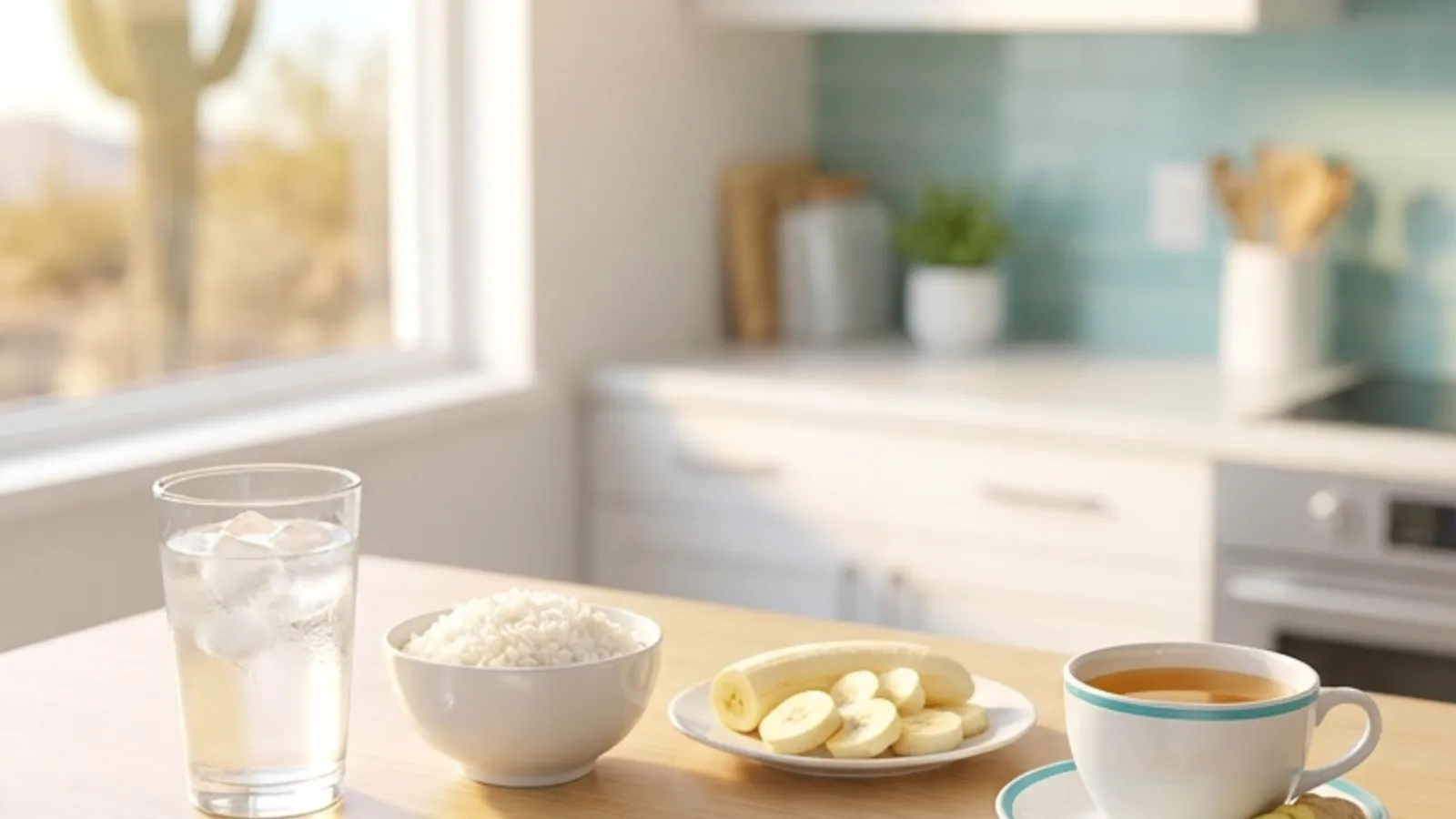
- Go easy on fat and spice, especially in dose-increase weeks. Bland, cool foods like rice, toast, bananas, yogurt, and broth tend to sit better.
- Cut back on alcohol and fizzy drinks. The Wharton paper specifically flags both for nausea and indigestion.
- Stay upright after meals. Give your stomach 30 minutes or more before you lie down or bend over.
- Sip fluids between meals, not with them. Small, frequent sips of cold water or a diluted electrolyte drink keep you hydrated without crowding a full stomach.
- Plan around injection day. Semaglutide reaches its peak blood level 1 to 3 days after a dose, per the Wegovy label. Many people find those days the roughest, so stock bland food and fluids ahead of time, especially before a dose step.
- Keep a symptom log. Note what you ate, when you injected, and when nausea hit. Your prescriber can use that pattern.
One more thing to check if you use a compounded product. In July 2024 the FDA warned about dosing errors with compounded semaglutide, often from mixing up units, milligrams, and milliliters. Reported effects included nausea, vomiting, dehydration, pancreatitis, and gallstones. If your nausea suddenly got much worse, confirm your dose with your pharmacy or prescriber.
Medicines to ask your prescriber about
When habits are not enough, the next layer of GLP-1 nausea relief is a prescriber decision. The Wharton authors suggest trying other approaches, such as slower titration, before antiemetics. Bring these options to your next appointment rather than starting them on your own.
Slowing the dose ramp
This is the strongest lever, and only your prescriber can pull it. The Wegovy label says that if a dose is not tolerated during escalation, prescribers can consider delaying the next step for 4 weeks. Wharton and colleagues also describe holding or lowering the dose for persistent symptoms. Please do not skip, split, or delay doses on your own.
Prescription anti-nausea medicine
Some prescribers use a short course of an antiemetic such as ondansetron (Zofran) while the dose is climbing. The Wharton paper notes the evidence here is limited, and that if you still need medication more than a month after reaching your maintenance dose, the dose itself should be revisited. Ondansetron can also cause constipation, which GLP-1 medications already do, so your prescriber will weigh that. Our guide to anti-nausea medication by IV compares the common options in more detail.
Reflux and indigestion help
Some nausea is really heartburn or reflux. The Wharton authors report that short-term acid reducers, such as an H2 blocker or a proton pump inhibitor, can help when reflux flares during dose increases. Ask which one fits your other medications.
Over-the-counter remedies
Ginger is the most popular home remedy, and many people find it soothing, though it has not been tested in GLP-1 trials. If you want a no-water option, we carry the NUTRAFi GLP-1 Relief Comfort Spray, a $35 dietary supplement with ginger, peppermint, and vitamin B6 that supports digestive comfort. It does not treat medication side effects; our deep dive on the spray covers how to use it. Check with a pharmacist before other OTC products, since drowsy motion-sickness pills and bismuth products are not a fit for everyone.
Why hydration and nausea feed each other
Nausea makes you drink less, and being low on fluids can make nausea worse. On a GLP-1, that loop starts quietly because many people also feel less thirsty and eat less food, which normally supplies part of your daily water. So staying hydrated is part of GLP-1 nausea relief.
The Wegovy label carries a warning called "Acute Kidney Injury Due to Volume Depletion," noting that most reported cases happened in people whose nausea, vomiting, or diarrhea left them dehydrated. Our Ozempic dehydration guide has a full daily hydration checklist.
Arizona adds pressure year round. Even in November, East Valley air is dry, and a morning walk at San Tan Mountain Regional Park or pickleball in Gilbert costs more fluid than you expect. If you are already queasy, watch for dark urine, dizziness when you stand, and a headache water will not touch. Our electrolyte imbalance guide explains the signs of low sodium and potassium.
When IV fluids may help with GLP-1 nausea
IV fluids may help when nausea or vomiting means you cannot keep enough liquid down. The fluid goes straight into a vein, so a slowed stomach does not have to absorb anything. Think of home IV fluids as the backstop of GLP-1 nausea relief, after the habits and prescriber steps above. The Wharton guidance notes that heavy, persistent vomiting with dizziness, confusion, and fatigue calls for urgent care, which may include IV rehydration.
| Situation | What usually fits |
|---|---|
| Mild queasiness, still eating and drinking | The 9 steps above, plus a talk with your prescriber if it lasts |
| Nausea that keeps returning each dose step | Prescriber visit to discuss a slower ramp or short-term medication |
| Can't keep fluids down, dark urine, lightheaded on standing, no red flags | Mobile IV fluids at home, after a medical intake review |
| Severe belly pain, fever, yellow skin, or vomiting over 24 hours | Your prescriber, urgent care, or the ER, not an IV at home |
Bottom line: most GLP-1 nausea responds to eating changes and a dose schedule your prescriber adjusts. IV fluids are for the day nausea has already cost you your hydration, and red flags always go to a doctor first.
RevivaGo brings two options to your home anywhere in the East Valley. The Hydration Boost is $149 for a liter of fluids with electrolytes and B vitamins. The Nausea Relief IV is $179 and pairs fluids and B vitamins with symptom relief, including anti-nausea medication when our medical team decides it is appropriate. Every visit starts with a medical intake that lists your GLP-1 and dose, and licensed RNs, NPs, and paramedics treat you under physician oversight.
New to this? Here is how an IV at home works, and our overview of IV therapy for nausea and vomiting covers the broader picture. An IV is supportive care. It does not replace a call to your prescriber about your dose.
Red flags: when GLP-1 nausea needs a doctor
Some symptoms on a GLP-1 are not routine side effects. Several come straight from the FDA label warnings, and all of them need medical care rather than home remedies or a mobile IV.
Go to the ER or call 911 for:
- Severe or persistent belly pain, sometimes spreading to your back, with or without vomiting. The Wegovy label lists this as a possible sign of acute pancreatitis.
- Fainting, confusion, or very little or no urine, which can signal serious dehydration or kidney strain.
- Vomiting blood or coffee-ground material, or a swollen, hard belly with no gas or bowel movements.
Call your prescriber the same day for:
- Vomiting that lasts more than 24 hours or being unable to keep fluids down for a day.
- Upper right belly pain, fever, or yellowing of your skin or eyes. The label links GLP-1 use to gallbladder problems, including gallstones and gallbladder inflammation.
- Shakiness, sweating, or confusion if you also take insulin or a sulfonylurea, which may mean low blood sugar.
- Nausea that is still constant a month after reaching your maintenance dose.
Also tell any surgeon or anesthesia team that you take a GLP-1. The Wegovy label notes rare reports of stomach contents entering the lungs during anesthesia because the stomach was not fully empty.
How long does nausea last on Ozempic or Mounjaro?
For most people, nausea on Ozempic, Wegovy, Mounjaro, or Zepbound is worst in the days to weeks after starting or raising a dose, then eases. STEP 1 and SURMOUNT-1 both found it was transient and concentrated in dose escalation. If it is still constant a month after you reach a stable dose, tell your prescriber.
Is it normal to throw up on a GLP-1?
Occasional vomiting is a known side effect, reported by about 25% of people on semaglutide 2.4 mg in STEP 1 and 8% to 12% on tirzepatide in SURMOUNT-1. It is not something to push through, though. Vomiting more than once in a day, or for more than 24 hours, is a reason to call your prescriber and focus on fluids.
Can I take Zofran with Ozempic or Zepbound?
Prescribers sometimes order a short course of ondansetron (Zofran) during dose increases, but it needs a prescription and a conversation first. Clinical guidance favors adjusting the dose schedule before relying on anti-nausea pills, and ondansetron can add to the constipation GLP-1s already cause.
Should I skip a dose if I feel nauseous?
No, do not skip, cut, or delay a dose on your own. Call your prescriber instead. The Wegovy label lets prescribers delay the next dose increase by 4 weeks when a step is not tolerated, and they can adjust your plan safely.
Does drinking water help GLP-1 nausea?
Water helps when it goes down in small sips between meals, since dehydration can make nausea worse. Large glasses with food can crowd a slowed stomach. On days with vomiting or heavy sweating, a low-sugar electrolyte drink or broth replaces salts better than plain water. If nothing stays down, IV fluids may help.
Feel steadier while your body adjusts
GLP-1 nausea relief is mostly patience plus small, smart habits: smaller portions, low-fat food, slow sips, and an honest conversation with your prescriber about the dose ramp. Most people find the queasiness fades as their dose settles. If nausea turns into a day of not keeping fluids down and you have no red flags, you can book a mobile IV or browse our full treatment menu, and a licensed provider will come to you in the East Valley, often the same day.
RevivaGo proudly serves Queen Creek, Gilbert, San Tan Valley, and the greater East Valley area. All treatments are administered by licensed healthcare professionals under physician oversight. This article is educational and not medical advice. RevivaGo does not prescribe GLP-1 medications. Talk to your prescriber about any side effect of your medication. NUTRAFi sprays are dietary supplements and are not intended to diagnose, treat, cure, or prevent any disease.