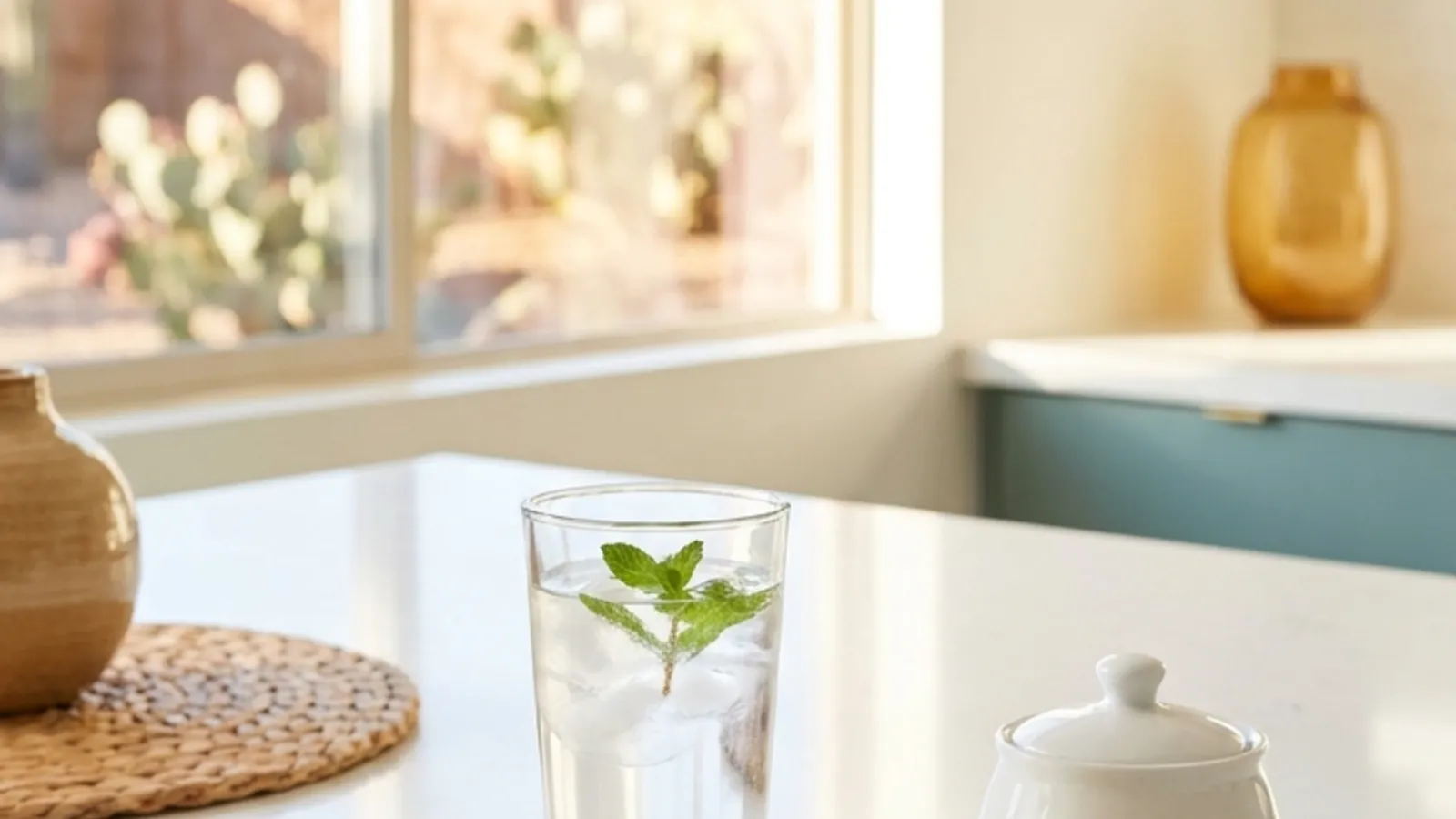
Does Salt Water Help With Hangovers? Safe Recipe & Limits
You wake up thirsty, headachy, and a little shaky, and someone swears by a glass of salt water. Does salt water help with hangovers? A little salt in water can help replace some of the sodium you lost overnight and may help your body hold on to the fluid you drink. Plain salt water is missing the glucose and potassium that make oral rehydration work best, though, and strong salt water can cause vomiting and diarrhea. The dose decides whether it helps or hurts.
Below: what salt actually does after drinking, a safer homemade recipe, how much is too much, and how salt water compares with pickle juice, broth, ORS, and IV saline. Already unable to keep fluids down? Skip ahead to hangover IV therapy in the East Valley.
Does salt water help with hangovers, or is it a myth?
Short answer: a weak salt solution can support rehydration, but it does not cure a hangover. Sodium helps your body keep the water you drink instead of passing it straight through. That can ease thirst and the dehydration piece of a hangover. It does nothing for inflammation, poor sleep, or the alcohol byproducts your liver is still clearing.
The evidence on salt by itself is thin. According to the National Institute on Alcohol Abuse and Alcoholism (NIAAA), research has not found a link between how much your electrolytes shift and how bad your hangover feels. The same NIAAA page notes that in most people, the body restores electrolyte balance on its own once alcohol wears off. So a salty drink is a hydration helper, not a fix. For the full fluids, food, and rest plan, see our hangover treatment guide.
Why your body loses salt and water when you drink
Alcohol suppresses vasopressin, the hormone that tells your kidneys to hold on to water. The NIAAA explains that this increases urination and fluid loss, and the mild dehydration that follows likely contributes to thirst, fatigue, and headache. Sodium, potassium, and other electrolytes leave with that fluid.
Arizona adds a second drain. Dry desert air pulls moisture from your skin and breath, even indoors. A late night in Gilbert or a patio evening in Queen Creek can leave you more dried out than the same night in a humid city. That is why Arizona heat dehydration often shows up the morning after, even when you "only had a few."
Why plain salt water falls short
Salt water handles one job: putting sodium back. Your gut absorbs fluid best when sodium arrives with glucose, because the two travel together into intestinal cells and water follows. That is the science behind oral rehydration salts (ORS).
The WHO and UNICEF reduced-osmolarity ORS formula contains 75 mmol/L sodium, 75 mmol/L glucose, and 20 mmol/L potassium, with a total osmolarity of 245 mOsm/L. Salt and water alone gives you the sodium but none of the glucose or potassium. It can still be better than nothing on a mild morning.
Too much salt is its own problem: a strong mix can pull water into your gut instead of out of it, which is how salty brine ends up causing diarrhea.
How to make a safer salt water drink at home
If you are going to try it, make a sugar-salt solution instead of plain brine. The widely used home recipe is close to WHO-style proportions:
- Start with clean water. Measure 1 liter (about 4 cups). Guessing the water volume is where most homemade mixes go wrong.
- Add half a level teaspoon of table salt. Level it off with a knife. Not heaping, not a "pinch and a shake."
- Add 6 level teaspoons of sugar. The sugar is not there for flavor. It helps your gut pull the sodium and water in.
- Stir until fully dissolved. It should taste mildly salty, never like seawater. Taste is only a sanity check; measuring is what keeps it safe.
- Sip, do not chug. Take a few swallows every few minutes. Big gulps on an irritated stomach can bring everything back up.
Measuring matters more than you think. A study of home-mixed solutions in the South African Medical Journal (Buccimazza et al., 1986) found that half a level teaspoon of table salt per liter produced a safe solution, and that taste is not a reliable way to tell if the sodium is too high. Health agencies such as the Government of Canada recommend commercial ORS packets over homemade versions when you can get them. A store-bought ORS or Pedialyte is the more predictable choice. Our oral rehydration salts guide covers how to use them.
How much salt is too much?
The FDA puts the daily sodium limit for adults at 2,300 mg, which is about one teaspoon of table salt. Half a teaspoon in a liter of water works out to roughly 1,150 mg of sodium, about half the day's limit, spread over a liter you sip slowly.
Some viral "salt water flush" recipes call for one to two teaspoons of salt in a quart of water. That is roughly 2,300 to 4,600 mg of sodium in one sitting, at or above a full day's limit. Those mixes are meant to act as a laxative. When you are already dehydrated, triggering diarrhea is the opposite of what you want.
The two ways salt can go wrong
- Too much salt (hypernatremia). Concentrated salt water can push blood sodium too high. University of Utah Health's poison control team lists thirst as the first sign, followed in worse cases by a fast heart rate, muscle spasms, and seizures. They also warn that drinking salt water to make yourself vomit is dangerous and can be fatal. Never use salt water to "purge" alcohol.
- Too little salt (hyponatremia). Chugging large amounts of plain water after heavy losses can dilute your sodium. The Cleveland Clinic lists heavy beer drinking ("beer potomania") as one cause, with symptoms like nausea, headache, confusion, and muscle cramps, which can look a lot like a hangover.
Who should skip salt water
Talk with your clinician before adding salt to drinks if you have high blood pressure, kidney disease, heart failure, or a fluid or sodium restriction. A Cleveland Clinic dietitian points out that most Americans already get more sodium than they need, and people on low-sodium diets are often told to aim for 1,500 mg a day. This is general education, not personal medical advice.
Salt water vs pickle juice vs broth vs ORS vs IV saline
| Option | What it gives you | Good for | Watch out for |
|---|---|---|---|
| Plain salt water | Sodium only | A mild morning when nothing else is around | No glucose or potassium; easy to make too strong |
| Homemade sugar-salt solution | Sodium plus glucose (about 1,150 mg sodium per liter) | Mild dehydration you can sip through | Measuring errors; still lower sodium than WHO ORS |
| Pickle juice | Sodium, vinegar | A few sips if you crave salt | Research shows little change in blood electrolytes; acidic on an upset stomach |
| Salty broth | Sodium, some potassium, warmth | Mornings when sweet drinks sound awful | Sodium varies a lot by brand; check the label |
| Oral rehydration salts (ORS) | Measured sodium, glucose, potassium | The best at-home option if you can keep it down | Needs a working gut |
| IV saline (0.9%) | Sterile salt water straight into a vein (about 3,500 mg sodium per liter) | Vomiting, or a day you cannot afford to lose | Requires a licensed clinician; not for emergencies |
On pickle juice: studies from Miller and colleagues found that drinking small amounts of pickle juice did not meaningfully change plasma sodium or other electrolytes in the hour afterward. It may help muscle cramps through a reflex, but it is not a rehydration drink.
Bottom line: so does salt water help with hangovers compared with the alternatives? Only modestly. A measured sugar-salt solution beats plain salt water, and a commercial ORS beats both. If your stomach will not cooperate, no drink on this list works, because it all has to get past your gut first. For a brand-by-brand look, see the best electrolytes for a hangover and our breakdown of Pedialyte vs IV for a hangover. Comparing store-bought drinks? Read does Gatorade help with hangovers and our take on Electrolit for a hangover.
When salt water is not enough
Home remedies work when your body can absorb them. They stop working when:
- You vomit everything back within minutes
- You feel dizzy when you stand up
- Your urine stays very dark after a couple of hours of sipping
- You have a full workday, a flight, or kids to handle in a few hours
That middle zone, miserable but not an emergency, is where a mobile IV may help. It skips the gut and puts fluids directly into your bloodstream.
Go to the ER or call 911 instead
Some symptoms are not a hangover. The NIAAA lists signs of alcohol overdose that need emergency care right away:
- Confusion, stupor, or trouble staying awake
- Seizures
- Slow breathing (fewer than 8 breaths a minute) or irregular breathing
- Clammy skin, very low body temperature, or bluish or pale skin
- Repeated vomiting while not fully alert
Call 911 for any of these. Do not wait for every symptom, and do not try salt water, coffee, or a cold shower.
What a mobile hangover IV adds
An IV does not depend on your stomach. RevivaGo's Hangover Relief treatment ($229) is customized to your symptoms, focused on rehydration and settling your stomach. If your main problem is thirst and fatigue, our Hydration Boost delivers 1 liter of fluids with electrolytes and B vitamins for $149. Neither one "cures" a hangover, and time still finishes the job. IV fluids may help you feel better faster when sipping is not working.
Every visit is handled by a licensed RN, NP, or paramedic under physician oversight, after a short medical intake. A provider typically arrives in about 30 to 45 minutes, and treatment usually takes 30 to 45 minutes. There are no travel fees in our service area across Queen Creek, Gilbert, San Tan Valley, Mesa, and the rest of the East Valley. Curious what is actually in the bag? Our guide to lactated Ringer's vs normal saline explains the fluid types. You can also browse the full service menu and pricing.
Can you drink salt water to cure a hangover?
No. Salt water cannot cure a hangover. A weak salt solution may help replace sodium lost through extra urination, which can ease thirst and some dehydration symptoms. Inflammation, poor sleep, and alcohol byproducts also drive how you feel, and only time clears those.
How much salt should I put in water for a hangover?
Use no more than half a level teaspoon of table salt per liter of water, ideally with 6 level teaspoons of sugar. That is about 1,150 mg of sodium. Measure instead of tasting, since taste does not reliably flag a mix that is too salty.
Is pickle juice better than salt water for a hangover?
Not really. Pickle juice is salty, but studies found small servings barely changed blood sodium or electrolytes. It is also acidic, which can sting an upset stomach. A measured sugar-salt drink or a commercial ORS is a better rehydration choice.
Is Himalayan or sea salt better than table salt?
No meaningful difference for a hangover. Specialty salts contain trace minerals, but a Cleveland Clinic dietitian notes you would have to drink huge amounts to get anything besides sodium. Use whatever salt you have and measure it the same way.
Can salt water make a hangover worse?
Yes, if it is too strong. Concentrated salt water can trigger nausea, vomiting, and diarrhea, which costs you more fluid. Very large amounts can raise blood sodium to dangerous levels. Never drink salt water to make yourself throw up.
Is IV saline just salt water?
Normal saline is 0.9% sodium chloride in sterile water, so it is salt water in a precise, sterile form. The difference is delivery. It goes straight into a vein, so it does not need your gut to absorb it, and a licensed clinician controls the amount.
Ready to skip the salt shaker math?
So, does salt water help with hangovers? A measured, weak solution can support rehydration on a mild morning. When you cannot keep anything down, or you need to function today, bring help to your door instead. RevivaGo offers physician-guided hangover IV therapy across Queen Creek and the East Valley, with transparent pricing and no travel fees. Questions first? Check our FAQ.
Book your hangover recovery and get your day back.
RevivaGo proudly serves Queen Creek, Gilbert, San Tan Valley, and the greater East Valley area. All treatments are administered by licensed healthcare professionals under physician oversight.